Starting a career in cloud computing can feel overwhelming, but earning a professional credential is a smart first step. This guide helps you navigate the path toward becoming a cloud expert. We will explore how to build your skills from the ground up using a clear, logical roadmap.

You will learn about essential exams like the AZ-900, AZ-104, and AZ-305. We also cover how to choose the right path for your specific career goals. Practical experience is vital, which is why we highlight how Nexperts EduTech provides hands-on training to help you succeed. Whether you are new to tech or looking to pivot, this azure certification guide offers the clarity you need to move forward with confidence.
Key Takeaways
- Understand the foundational steps for starting a cloud computing career.
- Learn the difference between entry-level, associate, and expert exams.
- Follow a proven roadmap from basic concepts to advanced technical roles.
- Discover how hands-on training accelerates your learning process.
- Get answers to common questions about the testing and preparation journey.
What Is Azure Certification?
Navigating the world of cloud computing begins with a clear grasp of what a formal credential entails. An azure certification is a professional recognition issued by Microsoft that confirms your ability to perform specific tasks within their cloud ecosystem. By passing a rigorous exam, you demonstrate that you possess the technical knowledge required to manage, build, or secure cloud-based solutions.
How Microsoft Azure certification validates cloud knowledge
When you earn a microsoft azure certification, you are providing objective proof of your skills to potential employers. These exams are designed to test your understanding of cloud concepts, services, and management tools. Validation is key here, as it helps bridge the gap between theoretical learning and practical application in a professional environment.
Microsoft role-based certifications and exam credentials
Microsoft organizes its azure certifications around specific job functions to ensure that your learning path aligns with your career goals. Whether you are interested in becoming a system administrator, a software developer, or a security expert, there is a tailored path for you. These credentials focus on the real-world responsibilities you will face in your daily work, such as managing virtual networks or deploying scalable applications.
What beginners should know before choosing an Azure exam
If you are just starting out, it is important to distinguish between entry-level exams and advanced technical assessments. Most newcomers begin with azure fundamentals, which covers basic cloud concepts and service offerings. However, keep in mind that azure fundamentals is a starting point, not a complete substitute for hands-on experience.
Many beginners often ask if a microsoft azure certification alone is enough to secure a high-level role. While these credentials are highly respected, they work best when paired with personal projects, labs, or internships. Think of your certification as a foundation that proves you have the right knowledge to start building your professional experience.
Why Earn a Microsoft Azure Certification?
Deciding to pursue a professional credential can transform how you approach cloud technology. While the journey requires dedication, the rewards often extend far beyond a simple badge on your profile.
Build practical cloud skills with a structured learning goal
A formal azure certification provides a clear roadmap for your studies. Instead of wandering through endless documentation, you can organize your learning around core concepts like identity, networking, storage, and compute.
This structured approach ensures you cover essential services and governance models. By setting a specific goal, you turn abstract cloud theory into tangible technical knowledge that you can apply to real-world scenarios.
Strengthen your resume and professional credibility
Earning a microsoft azure certification acts as a signal to potential employers that you are serious about your craft. It provides clear evidence of focused study and a commitment to maintaining industry-relevant skills.
When you combine this credential with hands-on projects, internships, or lab work, your resume stands out. It demonstrates that you have moved past basic curiosity and have invested time in mastering the platform.
Prepare for cloud-focused roles and career transitions
Certification is a powerful tool for those looking to pivot into cloud-centric positions. It helps bridge the gap between your current background and the requirements of modern IT roles.
"The expert in anything was once a beginner."
— Helen Hayes
While the technical knowledge is vital, remember that employers also value your ability to communicate, document processes, and troubleshoot complex issues. Use your training to build a well-rounded professional profile that includes both technical and soft skills.
Use certification to measure progress without treating it as a substitute for experience
It is important to view any azure certification as a milestone rather than a final destination. These credentials serve as excellent progress markers that validate your understanding of specific services.
However, they are not a replacement for hands-on experience. A microsoft azure certification does not guarantee employment or total technical mastery on its own. Instead, treat it as a foundation that supports your ongoing growth and practical application in the field.
Azure Certification Levels and Role-Based Progression
Microsoft organizes its learning ecosystem into distinct stages that help you grow from a beginner to a cloud expert. By following these azure certification levels, you can transition from broad introductory knowledge toward highly specific technical implementation or advanced architectural design.
Fundamentals certifications for first-time cloud learners
If you are new to the cloud, the Fundamentals tier is your ideal starting point. These accessible options provide a high-level overview of cloud concepts and basic service offerings without requiring deep technical experience.
Associate certifications for hands-on technical roles
Once you grasp the basics, Associate-level credentials align perfectly with hands-on technical work. This stage of your azure certification path focuses on the practical skills needed to manage, monitor, and maintain cloud environments daily.
Expert certifications for advanced design and implementation responsibilities
Expert certifications are designed for professionals who handle complex responsibilities and large-scale infrastructure. These credentials validate your ability to design secure, scalable, and reliable solutions that meet rigorous business requirements.
Specialty certifications for focused Azure technologies and workloads
Specialty credentials differ from the standard progression because they target specific technologies or unique workloads. You might pursue these azure certifications to demonstrate deep expertise in niche areas like IoT, SAP on Azure, or specialized data management.
How experience, job responsibilities, and prerequisites affect certification choices
Selecting the right credential depends heavily on your current skill set and career goals. You should evaluate your daily job duties and the amount of practical experience you can dedicate to your studies before committing to an exam.
Always check the official prerequisites, as some advanced exams require you to hold an associate-level certification first. By aligning your learning with your professional needs, you ensure that your chosen path provides the most value for your career growth.
AZ-900, AZ-104, and AZ-305 Explained
Navigating the world of Microsoft cloud credentials starts with understanding three key exams that define your professional path. While there are many azure certification levels available, these three specific tests serve as the foundation for most infrastructure-focused careers.
AZ-900: Microsoft Azure Fundamentals for beginners
The AZ-900 exam is the perfect starting point for anyone new to the cloud. It provides a broad overview of essential concepts without requiring deep technical experience.
Core topics including cloud concepts, Azure services, security, governance, and pricing
This azure fundamentals exam ensures you understand the basic language of the cloud. You will learn how to identify core services and understand how Microsoft manages security and costs.
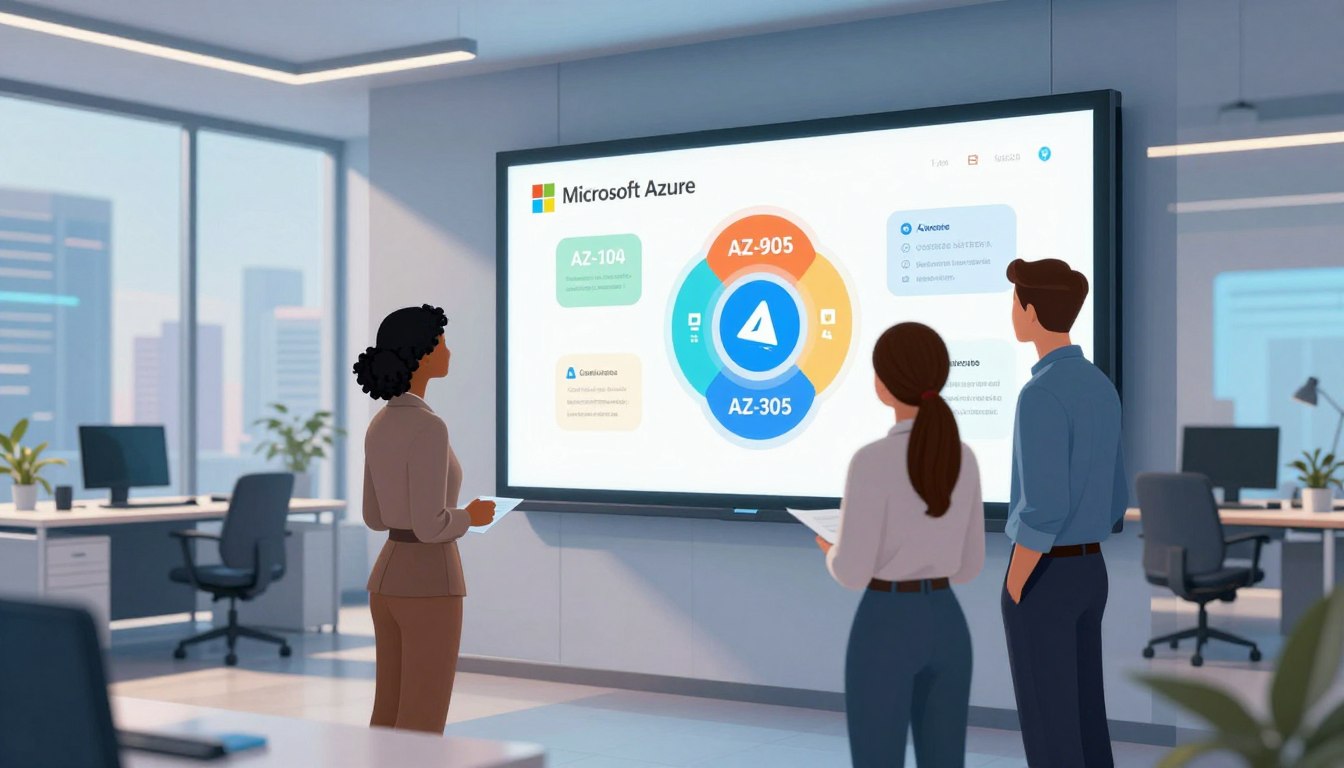
AZ-104: Microsoft Azure Administrator Associate for operational skills
Once you grasp the basics, the AZ-104 exam shifts your focus toward hands-on management. This is a critical microsoft azure certification for those who want to work directly with cloud environments.
Core topics including identity, storage, compute, networking, monitoring, and resource management
You will gain practical skills in managing virtual machines and configuring network connectivity. This exam validates your ability to handle day-to-day operations in a live production environment.
AZ-305: Designing Microsoft Azure Infrastructure Solutions for advanced architects
For those aiming for high-level design roles, the AZ-305 exam is the next logical step. It tests your ability to translate business requirements into secure, scalable cloud solutions.
Core topics including governance, data platforms, business continuity, security, and solution architecture
This advanced azure certification requires a deep understanding of how different services work together. You will focus on building resilient systems that meet complex organizational needs.
How these three exams fit into a realistic learning sequence
While you do not have to take every exam, following a structured path can accelerate your growth. Many professionals find that a logical progression helps them build confidence and technical depth.
- Start with AZ-900 to build a solid conceptual base.
- Move to AZ-104 to gain the operational experience needed for real-world tasks.
- Finish with AZ-305 to master the art of designing robust infrastructure.
This sequence provides a clear roadmap for anyone pursuing a microsoft azure certification. By mastering these azure certification levels, you prepare yourself for a successful career in cloud architecture.
Azure Certification Path for Beginners
Your journey into the Microsoft ecosystem begins with understanding the core building blocks of technology. Before diving into specific exams, you should gain a solid grasp of basic computer, networking, security, and cloud concepts. This foundational knowledge ensures you understand the terminology used throughout your azure certification path.
Start with basic cloud, networking, and computer concepts
Cloud computing relies on traditional IT principles. You should familiarize yourself with how servers communicate, the basics of data storage, and how security protocols protect sensitive information. Having this baseline makes the azure certification for beginners much more accessible and less intimidating.
Follow the simple beginner roadmap
Success in the cloud is often about following a logical progression. By sticking to a proven azure certification roadmap, you avoid feeling overwhelmed by the vast number of available exams.
Beginner → AZ-900 → career-specific certification → advanced certification
This sequence is designed to build your confidence step-by-step. You start as a novice, validate your basic knowledge with the AZ-900, and then specialize based on your professional goals. Consistency is the key to long-term success in this field.
"The expert in anything was once a beginner."
— Helen Hayes
Choose between administration, development, security, data, and architecture directions
Once you have your fundamentals, you must decide where you want to take your career. Whether you prefer the operational side of administration or the creative challenge of development, there is a path for you. You might also choose to focus on security, data engineering, or high-level architecture to align with your personal interests.
Build hands-on experience between certification milestones
Certifications are valuable, but they are most effective when paired with real-world practice. You should engage in personal projects, academic labs, or internships to apply what you have learned. Hands-on experience bridges the gap between theoretical knowledge and the practical skills employers demand.
When to move from fundamentals to an associate-level certification
You are ready to advance when you feel comfortable navigating the Azure portal and understand the core services. Do not rush this transition; ensure you have spent enough time experimenting with virtual machines, networking, and identity management. Moving to an associate-level azure certification is a significant step that rewards those who have taken the time to build a strong, practical foundation.
Azure Certification Roadmap by Career Goal
Navigating your professional growth requires a clear azure certification roadmap tailored to your specific career goals. By aligning your learning with your daily responsibilities, you ensure that every exam you pass provides immediate value to your current role. Success in the cloud is not just about collecting badges; it is about mastering the tools that drive business innovation.
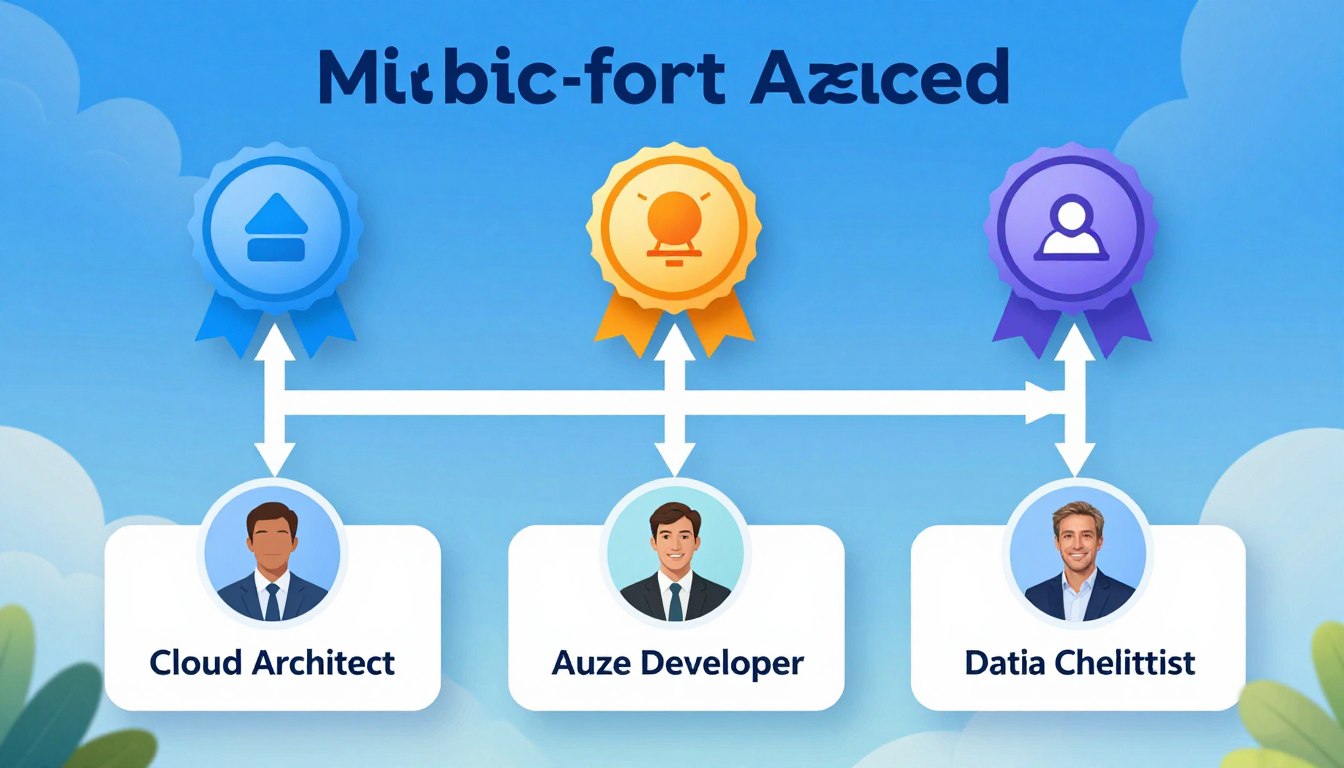
Cloud Engineers: AZ-900 followed by AZ-104 and advanced infrastructure skills
For those aiming to become cloud engineers, the journey typically begins with the AZ-900 to establish a baseline. Following this, the AZ-104 exam serves as the essential next step in your azure certification path. You should focus on mastering automation, networking, and operational reliability to truly excel in this field.
Developers: AZ-900 followed by Azure development and application-focused credentials
Developers benefit from starting with the fundamentals to understand the broader cloud ecosystem. Once you grasp the basics, you can pivot toward specialized credentials that focus on application development and deployment. This approach ensures your code is not only functional but also optimized for the cloud environment.
System Administrators: AZ-900 followed by AZ-104 and identity, networking, and operations practice
System administrators should prioritize the AZ-104 exam after completing their foundational studies. This certification validates your ability to manage identity, networking, and daily operations within the platform. Hands-on practice is vital here, as it bridges the gap between theoretical knowledge and real-world system management.
Solutions Architects: AZ-900, technical implementation experience, AZ-104, and AZ-305
Architects require a deep understanding of how different components work together to form a cohesive solution. You should start with the AZ-900 and gain significant technical implementation experience before tackling the AZ-104. Completing the AZ-305 exam is the final milestone for those seeking to design complex infrastructure, making these azure certifications highly valuable for career advancement.
"The capacity to learn is a gift; the ability to learn is a skill; the willingness to learn is a choice."
Brian Herbert
Security and data professionals: fundamentals followed by role-specific Azure security or data certifications
If your passion lies in protecting data or managing large-scale information, start with the fundamentals to understand the platform's security posture. From there, you can pursue specialized tracks that focus on Azure security or data platforms. Specialization allows you to become an indispensable asset in an increasingly data-driven world.
Best Azure Certification for Freshers
For those just entering the tech industry, finding the perfect starting point in cloud computing is a vital first step. Navigating the vast landscape of azure certification for beginners can feel daunting, but a structured approach ensures you build a solid foundation.
Why AZ-900 is usually the most approachable starting point
The AZ-900 exam, known as Azure Fundamentals, serves as the ideal entry point for most newcomers. It introduces core cloud concepts, services, and security principles without requiring deep technical experience.
By focusing on high-level knowledge, it allows you to understand the "why" behind cloud infrastructure. This certification builds confidence and provides a clear roadmap for your future professional growth.
When freshers should consider AZ-104 instead of stopping at fundamentals
If you already possess a background in systems administration, networking, or scripting, you might be ready for a greater challenge. The AZ-104 exam is designed for those who want to prove their operational skills in a real-world environment.
Choosing this path early is beneficial if you have already completed labs or managed virtual machines. It demonstrates to employers that you are ready to handle technical tasks immediately upon hiring.
How academic projects, labs, internships, and personal cloud projects add context
Certifications are powerful, but they are most effective when paired with practical experience. Academic projects and internships allow you to apply theoretical knowledge to actual business scenarios.
Personal cloud projects, such as hosting a website or building a small network, provide tangible proof of your abilities. These experiences turn your resume into a story of active learning rather than just test-taking.
How to select an Azure certification course that matches your current skills
Selecting the right Azure certification courses depends on your existing technical baseline. You should evaluate whether you need a broad overview or deep, hands-on technical instruction.
Look for programs that offer a mix of video content, reading materials, and interactive exercises. A good course will help you bridge the gap between your current knowledge and the requirements of the exam.
Using Nexperts EduTech for practical learning, hands-on training, and certification preparation
When you are ready to commit to your career, Nexperts EduTech offers comprehensive Azure certification training. Their approach emphasizes practical application, ensuring you gain the skills needed for the job market.
By combining guided instruction with real-world labs, they help you prepare for exams effectively. This focus on hands-on training ensures that you are not just memorizing facts, but truly understanding how to manage cloud environments.
| Certification Level | Primary Focus | Ideal Candidate |
|---|---|---|
| AZ-900 | Cloud Concepts | Absolute Beginners |
| AZ-104 | Administration | Technical Students |
| Advanced Paths | Architecture/Security | Experienced Professionals |
Skills and Career Opportunities After Azure Certification
Beyond the exam itself, the journey toward certification builds a robust foundation for your future career. Engaging in azure certification training allows you to gain deep insights into how modern cloud environments function. This knowledge serves as a springboard for long-term professional success.
Technical skills developed through Azure certification training
The process of preparing for these exams ensures you understand the core pillars of cloud infrastructure. You will gain practical experience that translates directly into workplace efficiency.
Resource management, identity and access, networking, storage, compute, monitoring, and governance
These core areas form the backbone of any cloud-based project. By mastering these domains, you demonstrate that you can handle complex tasks with confidence. Technical proficiency in these areas is highly valued by employers in the United States and globally.
Transferable skills for troubleshooting, documentation, automation, and collaboration
Technical knowledge is only one part of the equation. You will also develop essential soft skills that make you a well-rounded professional. These abilities include:
- Troubleshooting: Identifying and resolving complex system issues quickly.
- Documentation: Creating clear records of cloud configurations and processes.
- Automation: Using scripts to streamline repetitive tasks and improve accuracy.
- Collaboration: Communicating technical decisions effectively to team members.
Entry-level opportunities in cloud support, junior administration, and technical operations
Earning azure certifications provides a clear signal to recruiters that you possess validated skills. Many professionals start their journey in roles that focus on maintaining system health and supporting end-users. These positions offer a great environment to apply your classroom learning to real-world scenarios.
Growth opportunities in cloud engineering, DevOps, development, security, and architecture
As you gain experience, your career path can expand into more specialized domains. You might choose to focus on building secure infrastructure or designing scalable applications. The demand for skilled experts in these fields continues to grow as more companies migrate to the cloud.
Complementary learning paths through Nexperts EduTech networking, AWS, DevOps, and Cybersecurity courses
To truly stand out in a competitive job market, consider broadening your expertise beyond a single platform. Nexperts EduTech offers a variety of programs to help you round out your profile. You can explore:
- Networking courses to master the connectivity behind cloud services.
- AWS training to gain a multi-cloud perspective.
- DevOps programs to improve your deployment and delivery pipelines.
- Cybersecurity courses to protect critical digital assets.
How to Prepare for an Azure Certification Exam
Achieving success on your azure certification journey starts with a well-structured study plan. Proper preparation ensures you feel confident and ready when you finally sit for your exam.
Review the official exam skills outline before studying
Every exam has a specific set of objectives published by Microsoft. You should download this document first to understand exactly what topics are covered.
Focusing your energy on these specific domains prevents you from wasting time on irrelevant information. Knowing the weight of each section helps you prioritize your study efforts effectively.
Create a weekly study plan based on available time and target exam
Consistency is the secret to mastering complex cloud concepts. Break your study goals into manageable weekly chunks that fit your personal schedule.
Whether you have five hours or twenty hours per week, a steady pace is better than cramming. Setting clear milestones will keep you motivated throughout the process.
Combine Microsoft Learn, documentation, practice questions, and guided instruction
A multi-faceted approach to learning yields the best results. Use Microsoft Learn for foundational knowledge and official documentation for deep dives into specific services.
Supplement these resources with practice questions to get comfortable with the exam format. High-quality azure certification training often combines these elements to provide a comprehensive view of the platform.
Use Azure labs to practice identity, storage, virtual machines, networking, and monitoring
Theory alone is rarely enough to pass a technical exam. You must get your hands dirty by building resources directly in the Azure portal.
Practice setting up virtual machines, configuring network security groups, and managing identity access. Practical experience makes abstract concepts much easier to remember during the test.
Study strategically with Nexperts EduTech certification preparation and hands-on training
While official resources are essential, structured guidance can accelerate your progress significantly. Nexperts EduTech offers specialized azure certification training that bridges the gap between theory and real-world application.
Their programs help you navigate complex topics without feeling overwhelmed. This strategic support acts as a roadmap to ensure you cover all necessary exam requirements.
Track weak areas and use practice exams as readiness checks
Regularly testing your knowledge is vital for identifying gaps in your understanding. Use practice exams to simulate the actual testing environment and timing.
If you consistently struggle with a specific topic, go back and review the documentation. Tracking your progress ensures you are truly ready before you pay for your exam voucher.
Plan exam-day logistics, including registration, identification, timing, and review strategy
The final step involves managing the practical details of your exam day. Ensure you have a valid government-issued ID and a quiet, reliable space if you are testing remotely.
Familiarize yourself with the exam interface and the time limits for each section. Having a solid plan for how to review flagged questions will help you stay calm and focused until the very end.
How to Choose Azure Certification Courses and Training
Navigating the vast landscape of available training options requires a strategic approach to your career goals. Selecting the right azure certification courses is the foundation of your success in the cloud industry. You must ensure that the material aligns with your current technical background and your long-term professional aspirations.
Match course depth to your role, experience, and selected exam
Before you commit to a program, evaluate whether the content matches your current skill level. Beginners should prioritize foundational courses that explain core concepts, while experienced professionals might need advanced architecture training. Always verify that the curriculum covers the specific domains listed in the official exam guide to avoid wasting time on irrelevant topics.
Look for practical exercises instead of memorization-only instruction
True mastery of cloud technology comes from doing, not just reading. Avoid programs that rely solely on rote memorization, as they rarely prepare you for the complex, scenario-based questions found on modern exams. Active learning through real-world scenarios ensures you can apply your knowledge effectively in a professional environment.
Evaluate hands-on labs, instructor support, updated materials, and certification preparation
High-quality azure certification training must include interactive labs that allow you to experiment within a live environment. Check if the provider offers access to instructors who can clarify difficult topics and provide guidance when you get stuck. Furthermore, ensure the materials are updated regularly to reflect the latest changes in the platform.
"The expert in anything was once a beginner."
— Helen Hayes
Compare Azure training with complementary AWS, DevOps, networking, and cybersecurity learning
A well-rounded cloud professional often looks beyond a single platform. Comparing your Azure studies with AWS, DevOps, or cybersecurity courses can provide a broader perspective on how different technologies interact. Understanding networking fundamentals is particularly crucial for any cloud role, as it bridges the gap between traditional infrastructure and modern cloud services.
Use Nexperts EduTech course resources to build a focused, career-relevant plan
You can streamline your path by utilizing the structured resources available at Nexperts EduTech. These azure certification courses are designed to help you organize your study time efficiently while focusing on the most relevant technical skills. By integrating hands-on training with clear, career-oriented milestones, you can build a robust foundation for your future in the cloud.
Conclusion
Starting your journey toward a cloud career requires a clear plan and consistent effort. This azure certification guide provides the foundation you need to navigate the complex landscape of Microsoft technologies. By mastering basic concepts before moving to advanced roles, you build a sustainable professional trajectory.
The ideal azure certification path involves a steady progression from fundamental knowledge to specialized expertise. You should view exams like AZ-900, AZ-104, and AZ-305 as distinct milestones rather than interchangeable credentials. Each step serves a specific purpose in your development as a cloud professional.
Practical experience remains the most vital component of your success. You must balance your study time with hands-on labs and real-world projects to truly understand how these systems function. This approach ensures that your azure certification for beginners serves as a genuine reflection of your technical capabilities.
Take the time to evaluate your career goals and select the training that aligns with your ambitions. Resources from Nexperts EduTech offer the structured support necessary to turn your goals into reality. Begin your path today by choosing the right exam and committing to the hands-on practice that defines a successful cloud expert.
Frequently Asked Questions
Which microsoft azure certification is the best starting point for beginners?
For those new to the cloud, the AZ-900: Microsoft Azure Fundamentals is the most approachable starting point. It provides a broad overview of azure fundamentals, including cloud concepts, core services, security, and pricing, making it the perfect entry-level azure certification for beginners.
What does a typical azure certification path look like for a career in cloud engineering?
A standard azure certification roadmap usually begins with basic computer and networking concepts, followed by the AZ-900 for foundational knowledge. From there, aspiring engineers typically move to the AZ-104: Microsoft Azure Administrator Associate to gain operational skills, and eventually progress to expert-level credentials like the AZ-305 for solution architecture.
How many azure certification levels are there in the Microsoft ecosystem?
Microsoft categorizes its credentials into four distinct azure certification levels: Fundamentals for those new to the cloud, Associate for hands-on technical roles, Expert for advanced design and implementation responsibilities, and Specialty for focused technologies like Azure IoT or SAP workloads.
Can I jump straight to the AZ-104 exam, or must I pass AZ-900 first?
While the AZ-900 is not a mandatory prerequisite for the AZ-104, it is highly recommended for freshers. If you already have a solid understanding of networking, storage, and compute concepts, you may choose to start with the Associate level. However, following the structured azure certification guide helps ensure there are no gaps in your foundational cloud knowledge.
What are the most effective ways to prepare for a microsoft azure certification?
Successful preparation involves a mix of official Microsoft Learn documentation, practice exams, and hands-on experience. Enrolling in azure certification courses at Nexperts EduTech is an excellent way to access guided instruction and practical labs that simulate real-world scenarios, which is vital for passing technical exams.
Does earning an azure certification guarantee a job in the tech industry?
An azure certification is a powerful way to strengthen your resume and validate your skills to employers, but it is not a substitute for experience. To be a competitive candidate, you should combine your azure certifications with hands-on projects, internships, and a portfolio of lab work to demonstrate your troubleshooting and implementation abilities.
What technical skills will I develop during azure certification training?
Depending on the azure certification path you choose, you will develop expertise in identity and access management, virtual networking, cloud storage, compute resources, and monitoring. You will also learn about governance, cost management, and how to automate tasks using tools like Azure PowerShell or the CLI.
Are there specific azure certification courses for developers and data professionals?
Yes! Microsoft offers role-based pathways tailored to specific career goals. Developers often pursue the Azure Developer Associate credential, while data professionals might focus on Azure Data Engineer or Azure Database Administrator certifications. Nexperts EduTech provides resources to help you align your training with these specialized career directions.
How do I choose between Azure training and other platforms like AWS or DevOps?
Your choice should depend on your career goals and the requirements of the companies you want to work for. Many professionals find it beneficial to explore a multi-cloud strategy. You can compare azure certification training with complementary courses in AWS, DevOps, and Cybersecurity at Nexperts EduTech to build a more versatile and robust technical skillset.
AZ-900 Azure Fundamentals
Beginner Microsoft Azure cloud concepts, services, security and pricing training in the United States.
Learn more →AZ-104 Azure Administrator
Hands-on identity, compute, networking and operations for associate-level Azure roles.
Learn more →Contact
Corporate training enquiry.
Learn more →